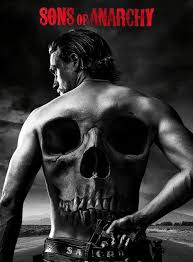
Kurt Sutter built Sons of Anarchy on a foundation that sounds, in a pitch room, either brilliant or absurd: Hamlet, relocated to a California biker gang. Jax Teller is the prince, Clay Morrow the usurping stepfather, Gemma the Gertrude who holds the whole thing together and apart simultaneously. The pilot doesn’t announce this scaffolding — it doesn’t need to. What the Shakespearean architecture gives the show is not a gimmick but a guarantee: a structural skeleton of proven load-bearing strength, onto which Sutter can hang an entirely original world. For writers considering how to use source material or classical influence in their own work, the pilot is a compelling demonstration of what adaptation means at its most creative — not transcription, but transformation.
The pilot’s first task is world-building, and it accomplishes it with considerable economy. Charming, California — the town SAMCRO effectively controls — is established as a place with its own complete moral ecosystem: a community that tolerates the club because the club keeps out worse. That moral complexity is seeded in the pilot’s earliest scenes, and it matters enormously to the show’s dramatic architecture. Jax’s central conflict is not simply between loyalty and conscience; it is between two visions of what the club is for and what Charming deserves. Without that ideological stakes, the show would be a crime drama with good bikes. With it, it becomes something closer to a western — a story about the founding and corruption of a community, and the cost of the violence required to maintain it. Writers seeking help with their script who are developing crime drama or any world-dependent story will find the pilot’s approach to community-as-character worth studying in detail.
Jax himself is introduced through action and object in equal measure — the pilot opens on him skating through a crime scene with an ease that establishes both competence and belonging, and later gives him his father’s manuscript, the show’s device for externalising his divided inheritance. That manuscript is a precise piece of screenwriting: it gives Jax somewhere private to exist on screen, a relationship with his dead father that the show can return to, and a thematic anchor for the question the whole series will turn on — what did John Teller build, and what has been done to it since? Introducing that question in the pilot, through a physical object rather than exposition, is the kind of craft decision that benefits from close script analysis: the best dramatic writing hides its architecture inside its texture.
If you’re developing a drama with a complex inherited world — a story where your protagonist is defined by what came before them as much as what they choose — I offer script consultancy, story structure support, and detailed screenplay notes for writers at every stage. I’d love to read your work.
To find out more read the pilot script here