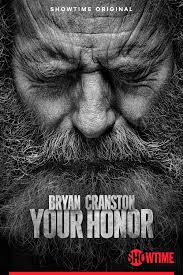
The Your Honor pilot is a masterclass in the mechanics of the irreversible. Within its first thirty minutes, respected New Orleans judge Michael Desiato watches his son commit a hit-and-run that kills the son of the city’s most dangerous crime boss — and makes, in the space of a single scene, the decision that will destroy everything he has spent his life building. What Peter Moffat’s adaptation understands, and what makes the pilot so instructive as a piece of dramatic writing, is that the interesting question is never whether Michael will make the right choice. It is how a good man — a man who has spent his career insisting on the law’s authority — arrives at the wrong one so quickly, and with such terrible clarity of purpose. The pilot answers that question in real time, and the answer is the show.
The screenplay’s most impressive structural achievement is the speed and credibility of Michael’s moral collapse. Lesser thrillers take episodes to move a protagonist from law-abiding citizen to active criminal; Your Honor completes that journey within its pilot, and does so without sacrificing psychological plausibility. The mechanism is love — specifically, the particular, ferocious, irrational love of a parent for a child — and Moffat is precise about how that love operates as a solvent on every other value Michael holds. Each scene tightens the logic of the trap: the more Michael learns about whose son his son has killed, the more inevitable his next step becomes, and the more the audience understands that inevitability even as they watch a good man cease to be one. For writers seeking scriptwriting help with thriller structure, that ratchet mechanism — each scene foreclosing the previous escape route, each revelation making the next compromise feel necessary — is as cleanly executed as anything in the genre.
The pilot also makes sophisticated use of dramatic irony in its construction of Michael’s professional world. We watch a judge — a man whose entire authority rests on the impartial administration of the law — begin to bend that law for the most human of reasons, in a city whose criminal ecosystem he knows with professional intimacy. That intimacy is not backstory; it is the trap’s mechanism. Michael knows exactly what he is getting into because his job has taught him exactly how these things end. His choice is therefore not made in ignorance but in full knowledge, which makes it morally darker and dramatically richer than the standard thriller premise. Writers looking for help with their screenplay who are developing morally complex protagonists will find the pilot’s handling of that full-knowledge choice — the way it refuses to exculpate Michael even as it makes him sympathetic — worth very close study.
If you’re developing a thriller and want to stress-test whether your inciting incident is carrying the moral and dramatic weight you’re asking of it — or whether your protagonist’s descent is credible at every step — I offer script consultancy, detailed script notes, and thriller screenplay analysis tailored to exactly those questions. I’d love to read your work.
To find out more read the pilot script here