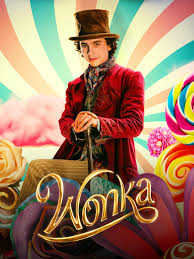
The origin story is one of the most structurally demanding forms in popular screenwriting, and one of the most frequently mishandled. Its core problem is a paradox: you are telling a story about someone becoming the person the audience already knows, which means the ending is fixed before the first scene, which means the drama cannot live in outcome. Paul King and Simon Farnaby’s screenplay for Wonka navigates this problem with considerable craft, and its solution is worth understanding clearly: the drama lives not in whether Willy Wonka will succeed, but in what it will cost him to stay the person he is in a world designed to grind that person down. That reframing of the origin story’s structural challenge — from destination to character preservation — is the screenplay’s most important creative decision, and it is made in the very first scene.
The screenplay’s tonal achievement is equally significant and harder to pull off than it appears. Wonka operates in a register of earnest, unironic delight — it takes its own whimsy entirely seriously, without the protective layer of self-awareness that most contemporary studio films use to hedge against sincerity. That tonal commitment is a craft decision with real structural consequences: once you have declared that your world is genuinely magical and your protagonist’s belief in that magic is genuinely valid, you have committed to earning every emotional beat without the safety net of irony. King, whose previous films demonstrated the same tonal confidence, understands that this register is not naivety but discipline — the discipline of a writer who trusts their own material absolutely. For writers seeking story structure help with family films, musical screenplays, or any project where wholehearted sincerity is the register, the screenplay is a precise and valuable model for how to make that commitment and honour it throughout.
The screenplay’s use of the ensemble is also instructive. The Scrubbit’s laundry basement — where Wonka and his fellow debtors are imprisoned — functions as a compressed dramatic world with its own complete internal logic, its own hierarchy, and its own emotional stakes. Paul King has spoken about the influence of classic Hollywood on his work, and it is visible here in the economy with which each ensemble member is established and the warmth with which they are treated. Nobody in the basement is merely functional. Each character has a specific want, a specific manner of coping, and a specific reason for being moved by Wonka’s refusal to be defeated. That generosity of characterisation is not sentimentality but structural intelligence: an ensemble that is fully alive amplifies the protagonist’s story rather than merely accompanying it. Close script analysis of the basement sequences reveals a screenplay that is doing character work and plot work and tonal work simultaneously, in scenes that appear effortless and are not.
The villain structure also rewards attention. The chocolate cartel — three established chocolatiers who have bribed their way to a monopoly — are drawn with a comic precision that keeps them threatening without making them frightening, which is exactly the calibration the film’s register requires. Their venality is systemic rather than personal, which means Wonka’s battle is not merely against three bad men but against the way established power organises itself to exclude the new and the strange. That is a considerably more interesting dramatic problem than a standard antagonist provides, and it connects the film’s whimsical surface to something with genuine thematic roots. For writers looking for screenplay help with stories built around an outsider protagonist challenging an entrenched system — in any genre, at any register — the screenplay’s handling of that opposition is worth studying carefully.
If you are developing a family film, a musical screenplay, an IP prequel or origin story, or any project where tonal commitment and structural rigour need to work in precise concert, I offer screenplay development support, script consultancy, and detailed script notes for writers at every stage. I’d love to read your work.
To find out more read the screenplay here
What do you think the screenplay of Wonka gets right — or wrong? Drop your thoughts in the comments below. And if you’re working on a TV script and want sharp, honest feedback on what’s on the page (and what isn’t yet), take a look at my script consulting services here.