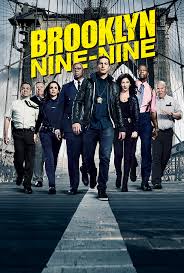
The Brooklyn Nine-Nine pilot sets up what appears to be a straightforward workplace comedy opposition: Jake Peralta, the brilliant-but-immature detective who has never had to grow up, meets Raymond Holt, the new captain whose exacting standards are going to make Jake’s life considerably more difficult. It is a premise the audience has seen before, and Dan Goor and Michael Schur know it. What they do with that familiarity — the speed and confidence with which the pilot subverts the expected dynamic and replaces it with something far more interesting — is the show’s founding creative achievement, and it is accomplished almost entirely within the twenty-two minutes of the pilot. For writers seeking comedy writing help, the precision of that reversal is worth studying in detail: the best sitcom premises are not the ones that set up a conflict but the ones that set up a relationship, and those are different things.
The pilot’s structural intelligence lies in how it handles Raymond Holt. The obvious version of this character — the humourless authority figure whose rigidity is the joke — is the version the pilot spends its first act carefully assembling, and then quietly discards. Holt’s introductory speech to the precinct is a masterpiece of comic misdirection: apparently a recitation of institutional expectations, it is in fact a revelation of a man who has survived decades of systemic hostility through absolute self-possession, and whose dignity is therefore not a target but an achievement. That reframing, delivered through Andre Braugher’s performance of a screenplay that has been written to support it, transforms the show’s entire dramatic geometry. Jake’s irreverence is no longer the comedy of a free spirit chafing against authority; it becomes the comedy of a child who hasn’t yet understood what it has cost the adult in the room to be in the room at all. That is a considerably richer comic premise, and it arrives in the pilot’s second act. Writers looking for help with their script who are developing ensemble comedy will find the pilot’s handling of that geometry — how it establishes one dynamic in order to replace it with a better one — one of the most instructive examples in the genre.
The ensemble construction is equally disciplined. Goor and Schur populate the Nine-Nine with characters who are, on first appearance, comedy types — the competitive overachiever, the incompetent optimist, the deadpan veteran, the enthusiastic outsider — and spend the pilot quietly complicating each of them with just enough specific human detail to suggest there is more underneath. That technique — establishing legibility before complexity, so the audience can track the ensemble before it invests in them — is one of the foundational skills of sitcom writing, and the pilot executes it with the confidence of writers who have done it before. For anyone seeking scriptwriting consultancy on a comedy pilot with a large cast, the question to ask of your own work is whether each character is both immediately legible and immediately worth knowing more about. The Brooklyn Nine-Nine pilot answers yes to both, for every principal, within its first ten minutes.
If you’re developing a comedy pilot — workplace, ensemble, or otherwise — and want experienced script analysis, comedy writing feedback, and story structure support from someone who takes the craft of comedy as seriously as any other form, I’d love to read your work. Get in touch to find out more.
To find out more read the pilot script here