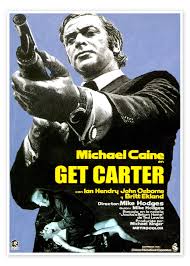
Mike Hodges’ screenplay for Get Carter, adapted from Ted Lewis’s novel Jack’s Return Home, is one of the most unsparing pieces of British crime writing ever committed to screen. It arrives without preamble, without comfort, and without the slightest interest in making its protagonist likeable in any conventional sense. Jack Carter steps off a train in Newcastle and the screenplay never once suggests that what follows will be resolved in any way that resembles justice, redemption, or the restoration of order. That refusal — so absolute and so early — is the screenplay’s founding moral position, and everything that follows is a consequence of it. For writers working in crime drama or any genre where the temptation to soften the material is persistent and powerful, Get Carter remains the cleanest available argument for holding the line.
The screenplay’s structural economy is extraordinary and worth studying in precise detail. Hodges works with the stripped-back efficiency of a writer who has decided that every scene must do its work and depart, that no exchange exists for atmosphere alone, that the world of the film will be built entirely from action and implication rather than exposition or commentary. Carter’s investigation into his brother’s death is assembled from fragments — a conversation here, a threat there, a connection made across a cut — and the audience is required to do work that lazier crime screenplays do for them. That demand on the audience is not a flaw but a structural argument: this is a world without explanation or apology, and the screenplay refuses to provide what the world refuses to provide. For writers seeking screenplay help with crime drama or any tightly constructed genre piece, the screenplay’s economy — what it leaves out as much as what it includes — is the primary lesson, and one of the hardest to internalise.
The screenplay’s treatment of place is also exceptional and deserves close script analysis. Newcastle in Get Carter is not a backdrop but a dramatic participant — the power stations, the multi-storey car parks, the brutalist geography of post-war industrial England are rendered with a specificity that makes them inseparable from the story’s moral texture. This is a world built on compromised money and compromised people, and its physical ugliness is the screenplay’s most persistent visual argument. Hodges understood something that many crime writers miss: that place is character, that the world your protagonist moves through should express and amplify the drama rather than simply contain it. The screenplay’s Newcastle is the inside of Carter’s situation made visible, and every location choice is therefore a dramatic choice. For any writer working with a strongly defined setting — British or otherwise — the film’s use of location as moral landscape is among the most instructive examples in the canon.
The ending — which I will not detail here for those who haven’t seen it — is the screenplay’s final and most austere statement. It follows its own logic to a conclusion that offers no catharsis, no release, no sense that anything has been put right or that the violence has meant what violence is supposed to mean in genre cinema. It is an ending that trusts the audience absolutely, and that requires a writer willing to serve the story rather than the audience’s comfort. That willingness — to follow your material to its true conclusion rather than the conclusion that feels safer or more satisfying — is, in my view, one of the defining qualities of serious dramatic writing, and one of the things I find most valuable to discuss when offering screenplay feedback, script analysis, and story structure consultancy to writers developing their craft.
If you are developing a crime screenplay, a genre piece with serious dramatic ambitions, or any project where moral austerity is the register and structural economy is the method, I offer script consultancy, detailed screenplay analysis, and story structure support for writers working at that level. I’d love to read your work.
To find out more read the screenplay here
What do you think the screenplay of Get Carter gets right — or wrong? Drop your thoughts in the comments below. And if you’re working on a TV script and want sharp, honest feedback on what’s on the page (and what isn’t yet), take a look at my script consulting services here.