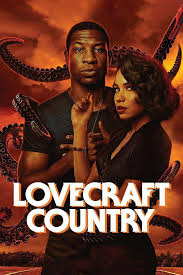
The Lovecraft Country pilot opens with a dream sequence of startling, almost delirious invention: Atticus Freeman fighting alongside Jackie Robinson against alien invaders, with a Lovecraftian monster looming in the background and Shoggoths closing in from the rear. It is a cold open that announces the show’s entire project in ninety seconds — the genre materials of mid-century American science fiction and horror, reclaimed and occupied by the people those genres historically rendered invisible. Misha Green’s adaptation of Matt Ruff’s novel is, from its very first image, an argument about who gets to be the hero of the American fantastic, and about what those stories look like when the perspective shifts. For writers thinking seriously about genre and the politics of form, the pilot is one of the most intellectually purposeful pieces of television writing of the last decade.
The structural decision that makes the pilot so distinctive is the refusal to separate its two horror registers. The supernatural horror — the monsters, the cursed estate, the ancient order of white men who control it — and the mundane horror of Jim Crow America exist on the same dramatic plane throughout. Neither is used to metaphorise the other; both are presented as equally real, equally lethal, and in a profound sense equally American. The road trip that forms the pilot’s narrative spine — Atticus, his uncle George, and his childhood friend Leti driving from Chicago to Massachusetts — is structured as a descent through both simultaneously. A sundown town and a creature in the darkness are encountered with the same matter-of-fact dread, because the show understands that for its protagonists, both have always been facts of life. That structural equivalence is the pilot’s most radical and most instructive craft decision, and it is worth close script analysis: the genre machinery is doing moral and historical work in every scene.
The pilot also demonstrates exceptional command of tonal range. Lovecraft Country moves between terror, tenderness, fury, and exhilaration — sometimes within a single sequence — without any of those registers undercutting the others. That range is held together by the specificity of the characters and the clarity of their relationships: Atticus, George and Leti are drawn with enough precision and warmth that the audience’s investment in them survives the show’s most extreme tonal lurches. For writers seeking screenplay help with genre material that needs to carry genuine emotional and thematic weight alongside its spectacle, the pilot is the template: the ideas are inseparable from the people, and the people are always the point. This is the kind of structural and character work where detailed script notes and screenplay feedback from an experienced eye can make a real difference — helping you locate exactly where your genre machinery and your human story are, and aren’t, pulling in the same direction.
If you’re developing a genre drama with serious thematic ambitions — a project where form and argument need to be in active, productive tension — I offer script consultancy, story structure support, and detailed screenplay analysis for writers working at that intersection. I’d love to read what you’re making.
To find out more read the pilot script here