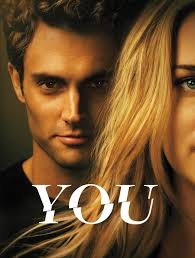
The You pilot does something that should not work: it makes a stalker charming. Not charming-despite-himself, not charming-in-a-way-we’re-meant-to-resist — genuinely, seductively, uncomfortably charming. Joe Goldberg’s voiceover is warm, literary, self-deprecating, and addressed directly to the woman he is already surveilling. By the end of the pilot’s first act, a significant portion of the audience is rooting for him. That achievement is the show’s central creative gamble and its most instructive craft decision, and it belongs entirely to the writing.
The mechanism is the second-person voiceover — Joe addresses Beck, and by extension the audience, as “you.” It is a choice with immediate structural consequences. It collapses the distance between viewer and subject, placing us inside a perspective we would never consciously endorse. We are not watching Joe watch Beck; we are, grammatically and experientially, Beck — seen, chosen, desired. The discomfort that accumulates as the pilot progresses is the discomfort of realising how thoroughly the screenplay has implicated us, and how willingly we walked in. For writers seeking scriptwriting help with unreliable or morally compromised narrators, this is the most sophisticated example of the form since Mr. Robot: the voiceover is not merely a device but a trap, and springing it on the audience is the pilot’s entire dramatic project.
The screenplay’s story structure is worth examining too. Sera Gamble and Greg Berlanti build the pilot on a dual architecture: Joe’s increasingly invasive pursuit of Beck runs in parallel with Beck’s own story, which the show renders with enough specificity and sympathy to ensure she is never merely a victim-in-waiting. That balance is harder to hold than it looks, and it matters enormously — if Beck is only an object, the show becomes what it is ostensibly critiquing. By giving her interiority, the screenplay makes Joe’s reduction of her to an object the dramatic argument rather than the dramatic fact. Good script analysis of the pilot should start here: with how the writing holds that ethical tightrope without losing its footing.
If you’re developing a psychological thriller, a morally complex narrator, or any script where the audience’s relationship to the protagonist is itself part of the drama, I offer detailed script notes, screenplay analysis, and story structure consultancy tailored to exactly those challenges. I’d love to read your work.
To find out more read the pilot script here