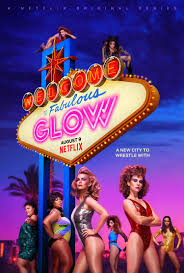
GLOW arrives with a premise that is, on its face, an industry comedy: a struggling actress in 1980s Los Angeles finds herself cast in a low-budget women’s wrestling show. But the pilot, written by Liz Flahive and Carly Mensch, is doing something more layered than its setup suggests — and the extra layer is right there in the title. Gorgeous Ladies of Wrestling. The show is, from its first scene, about the performance of identity: who we present ourselves as, how far that performance diverges from who we actually are, and what happens when the mask starts to fit. For writers seeking screenplay help with character-driven comedy drama, that thematic richness packed into a single, playful premise is worth understanding precisely.
The pilot’s structural confidence lies in how it introduces Ruth Wilder. We meet her not in a moment of triumph but in one of spectacular, mortifying failure — an audition so badly misjudged that the scene is almost unwatchable in the best possible sense. The pilot doesn’t soften this or rescue her quickly. It lets Ruth be wrong, lets her be oblivious about being wrong, and in doing so establishes the show’s central dramatic irony: Ruth believes in her craft with an earnestness the world around her finds variously baffling and exhausting. That gap between self-perception and external reality — the same engine that powers WWDITS, the same engine that powers most great comedy — is established here with real economy and precision. Story structure help often focuses on plot mechanics; this pilot is a reminder that the richest structural decisions are frequently about character positioning.
The arrival of Sam Sylvia — the washed-up B-movie director who will eventually shape the wrestling show — is equally well-handled. His scenes with Ruth crackle because they are two people who are both, in different registers, performing competence they don’t currently possess. The screenplay withholds judgement on both of them, which is harder than it sounds: it would be easy to make Sam a simple obstacle or a simple mentor. Flahive and Mensch resist both options, and that resistance is a mark of mature dramatic writing. The characters are allowed their contradictions from the first episode, which means they have somewhere to go.
If you’re developing a comedy drama and want to stress-test whether your protagonist’s contradictions are working for the story rather than against it — or if you simply want experienced eyes on whether your pilot is establishing its tonal and structural ground clearly — I offer script consultancy, script editing, and detailed script notes for writers at every stage.
To find out more download the pilot script here