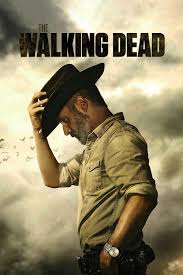
The Walking Dead pilot does something almost no other genre show attempts: it takes its time. Frank Darabont’s adaptation of Robert Kirkman’s comic opens not with horror but with silence — a lone sheriff’s deputy moving through an emptied world, the only sounds his footsteps and the distant moan of something not quite human. Before a single zombie has been properly encountered, before the premise has been explained or the mythology established, the pilot has already achieved its most important effect: it has made the audience feel the loneliness. That emotional achievement precedes and underwrites everything else the show does, and it is a lesson in world-building that any writer working in genre drama would benefit from studying closely.
The structural choice to follow a single protagonist — Rick Grimes waking alone in a hospital, piecing together a world that ended without him — is one of the most assured decisions in the pilot. It solves the world-building problem that bedevils so much speculative and post-apocalyptic drama: how do you convey the scale of a catastrophe without either drowning in exposition or short-changing the human story? Darabont’s answer is to make Rick’s ignorance structural. We learn what he learns, at the pace he learns it, and every new piece of information carries the full weight of his — and our — dawning comprehension. For writers seeking story structure help with high-concept or genre material, that alignment between protagonist knowledge and audience knowledge is a technique worth understanding deeply.
The pilot’s screenplay also demonstrates exceptional control over tone and pacing. Darabont came to television from film — The Shawshank Redemption, The Green Mile — and that background is visible in the pilot’s willingness to sit in a moment, to let a scene breathe, to trust that dread accumulates through restraint rather than incident. The horror, when it arrives, lands with force precisely because the pilot has been so patient. That patience is itself a craft argument: spectacle without emotional preparation is noise. Writers looking for scriptwriting help with horror or thriller material will find the pilot’s rhythm — the long, quiet build and the precisely timed release — as instructive as anything in the genre.
If you’re developing a genre screenplay, a post-apocalyptic drama, or any high-concept project where the world threatens to overwhelm the human story at its centre, a script consultant can help you find and hold that balance. I offer script notes, detailed screenplay analysis, and story structure consultancy for writers working across all genres.
To find out more download the pilot script here