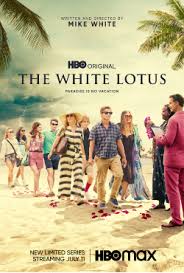
The White Lotus opens with a deceptively simple premise: a group of wealthy guests arriving at a luxury resort. Yet from its opening moments, the pilot quietly signals that something is off, framing the story with a flashforward that promises conflict beneath the surface calm.
What makes the episode so engaging is how clearly it defines its characters through behaviour. Shane’s entitlement and obsession with getting the “best” room immediately establishes him as both comedic and confrontational, while Rachel’s growing discomfort hints at deeper insecurities beneath her newly married status. At the same time, Armond, the hotel manager, is portrayed with a carefully controlled exterior that gradually cracks under pressure. For writers seeking script help, it’s a strong example of how character can be revealed through attitude and interaction rather than exposition.
The structure is patient but deliberate. The pilot introduces multiple storylines, but each is anchored in a clear character perspective, preventing the narrative from feeling scattered. If you’re looking for help with your story structure, this is a strong example of how to balance an ensemble while still maintaining cohesion—something a script consultant can help fine-tune.
Much of the episode’s impact comes from what’s left unsaid, with character interactions carrying underlying tension and meaning in every exchange. Conversations between Shane and Rachel, or between Armond and his staff, are loaded with subtext, revealing power dynamics, class tension, and personal insecurity. It’s a reminder that great writing often relies as much on implication as it does on explicit storytelling.
What the pilot ultimately excels at is control of tone. It blends satire, discomfort, and intrigue in a way that feels effortless, setting up both character arcs and thematic direction in a single episode. For writers wanting to develop stronger scripts, studying this kind of tonal precision—and seeking targeted script analysis help where needed—can make a significant difference to how a story lands on the page.
What do you think the pilot of The White Lotus gets right — or wrong? Drop your thoughts in the comments below. And if you’re working on a TV script and want sharp, honest feedback on what’s on the page (and what isn’t yet), take a look at my script consulting services here.